Beyond the Romance of Volcanic Wine
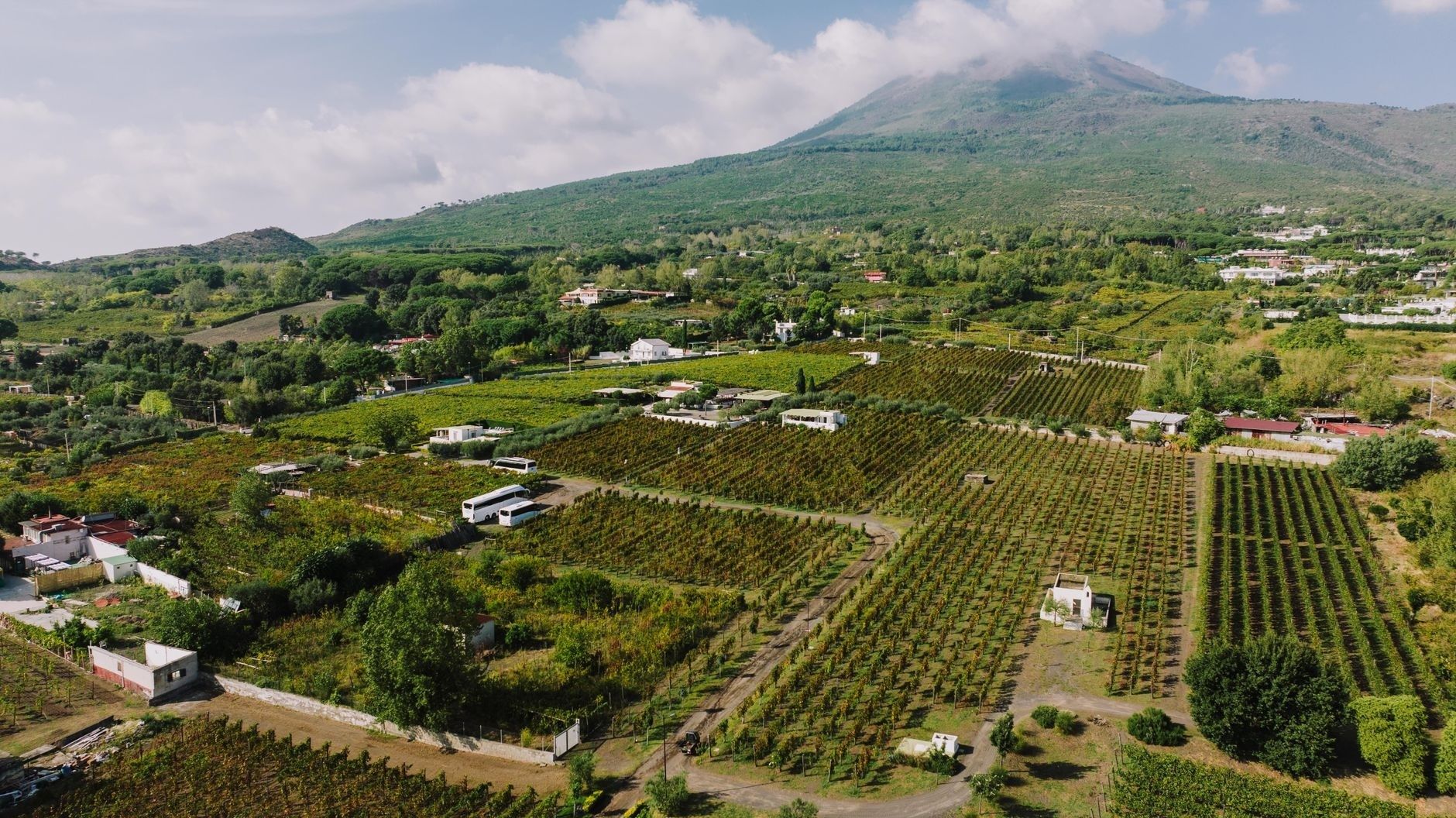
“Tasting the volcano” is one of wine”s most attractive ideas, but it is also one of its least precise. A glass of Etna Rosso or Santorini Assyrtiko can suggest smoke, wet stone, salt, ash, or struck flint, inviting a direct geological explanation. Yet vines do not absorb fragments of basalt, pumice, or obsidian and carry them into grape berries as flavor compounds. The more defensible explanation is subtler and more compelling: volcanic landscapes create distinctive physical conditions for roots, water, temperature, vine vigor, and fruit development.
That distinction matters when assessing claims about terroir. Volcanic soils often combine rapid drainage with a surprising ability to hold water in microscopic pores. They may contain little clay, offer limited fertility, and impose moderate but persistent water stress. These conditions can restrain yields, preserve acidity, and encourage structural tension. In some regions, loose ash and pumice have also protected ancient ungrafted vines from phylloxera. From Mount Etna to Santorini, such combinations explain why volcanic vineyards command fascination among collectors. The romance is real, but the mechanism is found in soil physics and vine physiology rather than in a literal infusion of stone.
The Anatomy of Eruption and Soil Mechanics
“Volcanic soil” describes a family of materials rather than a single vineyard type. Basalt is a dark, iron and magnesium-rich lava rock that can weather into relatively fertile, often reddish soils. Pumice is a highly vesicular volcanic material, full of cavities created by expanding gas, and is exceptionally light and porous. Ash, or tephra, consists of fine particles ejected during an eruption. When ash consolidates into rock, it may form tuff. A vineyard can contain one of these materials, several layered together, or volcanic deposits over older sedimentary or marine formations.
The practical consequence is a complex network of large and small pores. Large pores allow rainfall to move quickly away from the surface, reducing waterlogging and encouraging roots to travel downward. Smaller pores can retain water, making the soil less drought-prone than its loose appearance suggests. Volcanic ash soils can also have low bulk density, good friability, stable aggregates, and notable phosphate and water retention. As research discussed by the European Geosciences Union explains, these properties can develop through andosolization, the weathering process that produces characteristic volcanic soils.
The result is not automatically superior wine. Fertility, rainfall, exposure, rootstock, canopy management, and farming decisions remain decisive. However, many volcanic sites naturally create a useful balance between drainage and controlled water availability. Moderate water deficit can reduce vine vigor, berry size, and yield while increasing the concentration of phenolics, tannins, and anthocyanins, particularly in red grapes. Excessive drought does the opposite of what a quality-minded grower wants, shutting down photosynthesis and delaying or damaging ripening. The key is sustained, moderate stress rather than deprivation.
- Basalt often contributes warmth, iron-rich coloration, and a rocky, freely draining rooting environment.
- Pumice provides exceptional porosity and can retain moisture in internal cavities.
- Ash and tephra may weather into lightweight soils with strong water and phosphate retention.
- Tuff is consolidated volcanic ash, with drainage and mineral composition varying according to its formation.
Understanding how volcanic soils influence root depth and moisture retention reveals why these terroirs naturally temper vine yields. The most important question is not whether a vineyard contains a famous rock, but how its pore structure controls water movement through the growing season.
Demystifying Minerality Through Chemistry and Texture
The first principle is straightforward: vines do not “suck up” crushed rocks. Roots absorb water and dissolved ions, including nutrients such as potassium, calcium, magnesium, iron, and phosphate. Geological minerals such as quartz and feldspar are generally not transported intact into grape berries, and the elements that do enter the vine usually occur at concentrations far below the threshold required to taste them directly. The claim that a wine tastes of lava in the same way that tea tastes of infused leaves therefore fails as a chemical explanation.
That does not make minerality imaginary. It makes the term sensory rather than geological. Tasters use it to describe a cluster of impressions, including saltiness, chalky texture, wet stone, graphite, smoke, flint, iodine, and a firm, cool finish. High total acidity can make a wine feel linear and electrically vivid. Sulfur-related compounds, particularly in reductive wines, may contribute struck-flint, matchstick, or smoky notes. Lower fruitiness can also make these sensations more apparent because there is less ripe, sweet aroma competing for attention.
Water relations provide another important link. Volcanic soils that encourage moderate stress may produce smaller berries with a higher skin-to-juice ratio, especially in red varieties. In dry white-wine regions, low fertility and restricted water supply can preserve freshness while limiting exuberant tropical fruit. Potassium deserves careful handling in this discussion. Potassium uptake influences grape juice pH, and lower available potassium can help preserve a sharper acid profile. Yet soil potassium behavior varies widely, and it would be inaccurate to treat all volcanic vineyards as chemically identical.
- Acidity creates the mouthwatering, taut sensation commonly labeled mineral.
- Salinity may be suggested by coastal exposure, concentration, and wine chemistry, but it is not proof of dissolved volcanic rock.
- Reduction can add flint, smoke, and struck-match aromas, especially when oxygen exposure is limited.
- Texture can range from chalky and powdery to tensile, granular, or metallic, depending on acid, phenolics, lees work, and alcohol.
For serious tasting, “minerality” works best as a provisional description. Identify the exact sensation first, then ask what might explain it: acidity, sulfur chemistry, phenolic grip, salinity, low fruitiness, or the interaction of several factors. That approach preserves the usefulness of the word without turning it into a geological shortcut.
Ungrafted Survivors and the Phylloxera Shield
Phylloxera devastated European vineyards in the nineteenth century by attacking the roots of susceptible Vitis vinifera vines. The standard solution was grafting European fruiting varieties onto resistant American rootstocks. Volcanic landscapes offered an unusual form of protection. Loose ash, pumice, and sandy material can create a hostile physical environment for the insect, limiting its movement and reducing the continuous, moisture-friendly soil structure it needs to spread effectively.
Santorini is the clearest example. Its aspa soils combine basalt, pumice, ash, sand, and andesite with very little clay. Rainfall is scarce, yields are naturally low, and vines are trained close to the ground in woven basket shapes known as kouloura. The baskets protect grapes from the island”s strong meltemi winds and intense sunlight while helping capture nighttime humidity. Many vines remain ungrafted, some with extremely old root systems. Similar populations of old vines can be found in parts of the Canary Islands and on Mount Etna, where volcanic textures and historical isolation have helped preserve pre-phylloxera material.
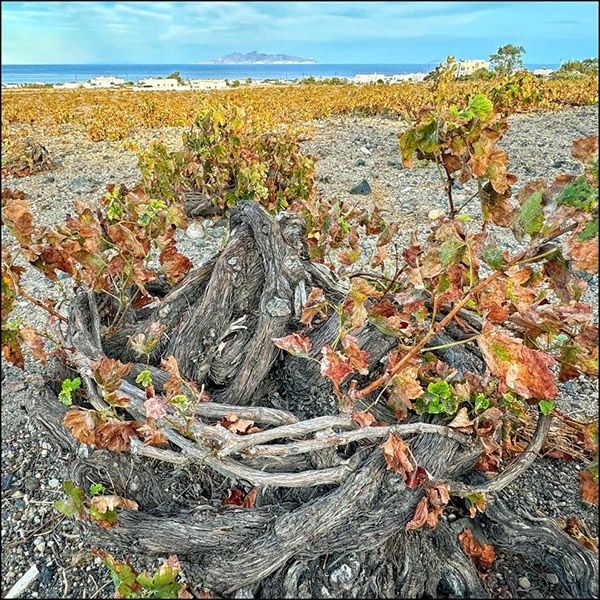
Ungrafted status is not a guarantee of quality, and vine age alone is not a flavor compound. Nevertheless, old vines often have extensive, irregular root systems and naturally moderated yields. Their balance can be particularly valuable in difficult climates, where deep roots access changing moisture zones and mature plants ripen modest crops without excessive vigor. In Santorini, Assyrtiko retains remarkable acidity under hot, dry conditions. On Etna, old Nerello Mascalese vines can combine pale color with firm tannin, savory perfume, and exceptional length.
- Loose volcanic deposits can restrict phylloxera movement.
- Ungrafted vines preserve original European root systems rather than grafted combinations.
- Age, low yields, and deep rooting may contribute to complexity, but they work alongside climate and farming.
- Basket training on Santorini is a practical response to wind, heat, drought, and humidity, not merely a historical ornament.
The distinction between “old vine” and “ungrafted vine” should remain clear on a label or in a cellar note. A vine can be old but grafted, or ungrafted but relatively young. When both qualities coincide, the vineyard becomes an unusually direct link to historical plant material and long-term adaptation.
A Field Guide to Major Volcanic Terroirs and Profiles
Volcanic identity changes dramatically from one region to another. Mount Etna”s high-elevation vineyards sit on successive lava flows, ash, and dark pumice, with substantial variation according to slope and eruption age. Santorini is drier and more wind-exposed, with almost no conventional topsoil in many sites. Napa Valley”s volcanic mountain vineyards are shaped by older geological events, elevation, aspect, and sharply contrasting materials such as basalt, andesite, ash, and tuff. The common thread is not a shared flavor but a recurring combination of drainage, limited fertility, and vine restraint.
| Region | Dominant materials | Primary variety | Acid and structure | Typical profile |
|---|---|---|---|---|
| Mount Etna | Lava, basalt, ash, black pumice | Nerello Mascalese | Bright acidity, fine but firm tannin | Red cherry, dried herbs, smoke, earth, lifted finish |
| Santorini | Ash, pumice, basalt, sand, andesite | Assyrtiko | Very high acidity, saline tension | Citrus, white flowers, iodine, wet stone, austere length |
| Napa volcanic pockets | Basalt, andesite, ash, tuff, rocky mountain soils | Cabernet Sauvignon | Dense tannin, concentrated structure | Black fruit, graphite, earth, spice, powerful ageworthiness |
Within Napa, the phrase “volcanic wine” should be used carefully. The valley contains diverse geology, and not every mountain site expresses the same combination of rock and climate. Diamond Creek demonstrated the point by bottling Cabernet Sauvignon from distinct soil zones, including gravelly material, red andesite, and white volcanic ash. The wines showed that site differences can be meaningful, but the final expression also reflects elevation, exposure, vine age, rootstock, irrigation, and cellar technique.
Mastering the Volcanic Glass in Your Own Cellar
A disciplined tasting can separate genuine sensory evidence from attractive geological storytelling. Start with acidity, not aroma. Does the wine make the mouth water immediately? Does the finish feel salty, bitter, chalky, smoky, or tannic? Is the impression driven by citrus and herbs, by reduction, or by a dry phenolic grip? These observations are more useful than simply recording “volcanic” in a notebook.
- Serve whites cool but not icy. Assyrtiko is usually clearest around 9 to 12 degrees Celsius. Excessive chilling suppresses aroma and exaggerates hardness.
- Give reductive wines air. A short decant or vigorous swirl can allow struck-flint and sulfur notes to recede, revealing citrus, flowers, and saline freshness.
- Serve structured reds slightly below room temperature. Nerello Mascalese and volcanic Cabernet often show best around 16 to 18 degrees Celsius, where tannin remains firm but fruit is not masked by heat.
- Compare across geology. Taste a volcanic wine beside a high-acid wine from limestone, granite, or sandy soil. Look for differences in texture, ripeness, tannin, and finish rather than searching for literal rock flavor.
- Choose transparent producers. Prioritize site-specific bottlings, clearly identified vineyards, old-vine or ungrafted details, restrained alcohol, and winemaking that does not overwhelm the fruit with heavy oak.
Ageworthiness often appears as a combination of acidity, tannin, concentration, and balance rather than as a simple result of volcanic origin. A well-made Santorini Assyrtiko can develop wax, smoke, and savory complexity while retaining its core of acid. Etna reds can gain dried-herb and earthy nuance without losing lift. Mountain Cabernet from volcanic Napa sites can require years for tannins to soften. Choose bottles with that structural architecture, then let the geology remain what it truly is: an influential growing environment, not a flavoring ingredient.