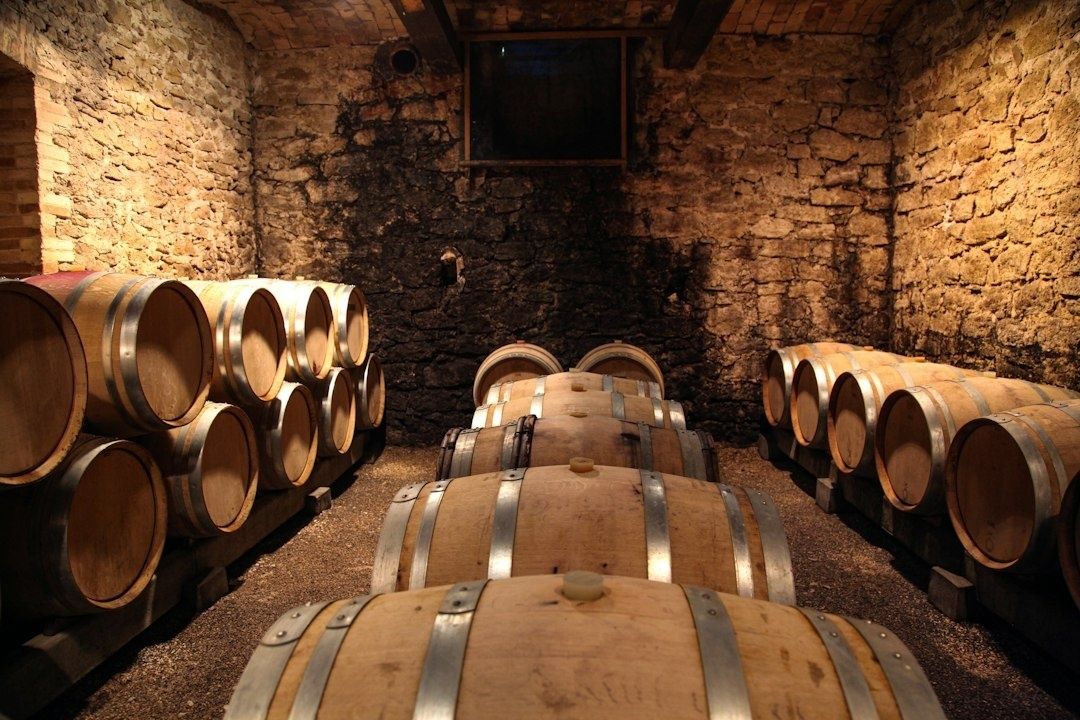
The Living Dynamic Between Wood and Maturation
Oak is not a passive container. During maturation, the barrel acts as a chemically active interface where wine, oxygen, wood polymers, seasoning history, and heat-induced extractives continuously interact. The practical question is therefore not simply whether a wine should see oak, but which botanical material, thermal history, grain structure, and contact geometry will produce the desired evolution without masking varietal identity.
This makes cooperage a meeting point between dendrology, thermodynamics, and organic extraction. Species determine the anatomical routes through which oxygen and liquid move, while bending and toasting alter cellulose, hemicellulose, lignin, ellagitannins, and lipid-derived precursors. The resulting compounds do not enter wine at a uniform rate. Some are rapidly released from the stave surface, while others migrate gradually from deeper layers. An authoritative guide to oak aging and barrel chemistry helps frame this system as both an extraction process and a controlled oxidative environment.
Dendrological Profiles Across European and American Oak Species
The three principal cooperage references, Quercus alba, Quercus petraea, and Quercus robur, differ in anatomy as well as chemistry. American white oak, Q. alba, contains heartwood tyloses that effectively block vessels. This structure allows the wood to be sawn while retaining watertightness. European oak requires splitting rather than ordinary sawing because its tyloses do not seal ruptured vessels as reliably. That distinction affects stave manufacture, grain orientation, permeability, and the consistency of the finished barrel.
Within European oak, sessile oak, Q. petraea, is generally associated with tighter grain and lower extractable polyphenol release than pedunculate oak, Q. robur. Pedunculate oak can contain comparatively high levels of extractable ellagitannins, which may contribute structure and astringency but can become forceful in wines with limited phenolic depth. American oak typically releases fewer polyphenols while offering greater aromatic potential through its higher concentration of cis and trans beta-methyl-gamma-octalactone isomers. The relevant distinction is not that one species is inherently superior, but that each creates a different balance between structural extraction and aromatic contribution.
| Oak type | Anatomical tendency | Primary chemical implication | Typical cellar consideration |
|---|---|---|---|
| Quercus alba | Abundant tyloses and relatively open growth structure | Lower polyphenol release, higher lactone potential | Useful where aromatic sweetness and coconut-like notes are acceptable |
| Quercus petraea | Often fine-grained and suited to split-stave cooperage | Moderate aromatic release with comparatively restrained tannin | Supports texture and fruit definition in structured wines |
| Quercus robur | Frequently wider-grained than sessile oak | Higher ellagitannin extraction potential | Requires careful matching to wine phenolic capacity |
Porosity should not be treated as a single variable. Ring width, vessel dimensions, tyloses concentration, stave preparation, and grain orientation all influence liquid access and oxygen transfer. A tighter grain generally slows diffusion and reduces the speed of extractive release, while wider grain can accelerate contact between wine and internal wood pathways. Oxygen ingress also depends on barrel assembly, bung condition, humidity, and fill management, so species alone cannot predict the complete oxidative trajectory.
Pyrolysis and the Thermal Physics of Barrel Toasting
Toasting is a controlled thermochemical treatment rather than a superficial flavor adjustment. As temperature rises, hemicellulose decomposes and produces furfural and 5-methylfurfural, compounds associated with caramel, toasted sugar, almond, and butterscotch impressions. Lignin undergoes cleavage and rearrangement, generating vanillin, guaiacol, eugenol, and related volatile phenols. Cellulose is more thermally resistant, but prolonged or intense heating eventually contributes to char formation and the breakdown of structural carbohydrate material.
The familiar categories of light, medium, medium-plus, and heavy toast are useful shorthand, but they are not standardized across cooperages. A medium toast from one producer may involve a different surface temperature, heating duration, stave moisture content, or cooling method than a medium toast from another. In broad terms, light toast preserves more native wood tannin and emphasizes spice and structure. Medium toast often maximizes vanillin and balances vanilla, baking spice, and caramel. Medium-plus shifts toward toasted bread, butterscotch, and roundness, while heavy toast increases smoke, coffee, char, guaiacol, and other volatile phenols as vanillin and wood-tannin contributions decline.
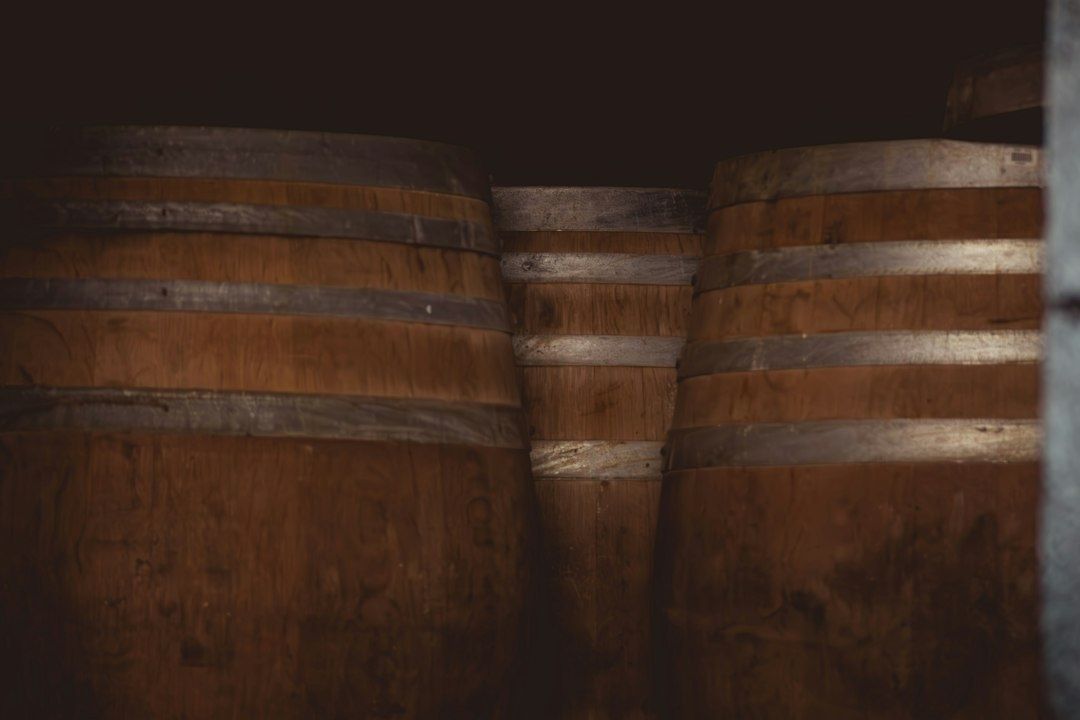
Empirical work on extraction kinetics and heat-treated wood polymers, including the analysis available through this research study on oak transformation, reinforces the need to separate compound creation from compound availability. Heat can generate a molecule, but its eventual sensory impact depends on concentration, solubility, wine composition, and extraction time.
- Cellulose: comparatively resistant during moderate toasting, but increasingly degraded under severe thermal exposure.
- Hemicellulose: a major source of furfural and 5-methylfurfural as heating progresses.
- Lignin: a precursor pool for vanillin, guaiacol, eugenol, and other aromatic compounds.
- Ellagitannins: reduced or transformed by heat, lowering the contribution of raw, harsh wood character.
- Lactone precursors: particularly significant in American oak and capable of producing coconut, woody, and sweet aromatic impressions.
The winemaking objective is to create enough thermal aroma and soften enough harsh structure without exhausting the wood’s capacity to support long maturation. A heavy toast may make a young wine appear rounder because aggressive tannin has been reduced, yet it can also remove some of the slower structural contribution required for longevity. Toast must therefore be selected alongside grape tannin, alcohol, pH, extraction regime, and intended élevage duration.
Mapping Extraction Depth and Compound Migration Timelines
Extraction begins at the wine-wood boundary. Surface-accessible compounds dissolve first, producing a steep concentration gradient between the outer stave layers and the interior. As those compounds are depleted, diffusion gradually draws material from deeper zones. This explains why a new barrel can deliver an obvious aromatic and phenolic signal early in maturation, while later months may produce subtler changes in texture, integration, and aromatic persistence rather than a simple increase in oak flavor.
Compound families also move at different speeds. Furfural and related toasted aldehydes can yield quickly because they are concentrated in heat-affected surface layers. Lactones may continue increasing over much longer periods, especially when the wood contains substantial precursor material beneath the immediate toast zone. A controlled study of American, European, and French oak found that American oak showed the highest lactone concentration after one year and maintained the highest total level over the observation period. However, sensory differences did not map mechanically onto concentration, and French oak was perceived as sweetest in one three-year comparison despite lower total lactone levels.
- Initial contact: surface extractives, toast-derived aldehydes, and readily soluble phenolics enter the wine first.
- Early maturation: oxygen transfer and rapid aromatic extraction interact with the wine’s existing tannin and ester profile.
- Intermediate maturation: deeper stave layers contribute slower-release lactones, ellagitannins, and less immediately expressive compounds.
- Extended maturation: concentration alone becomes less predictive as adsorption, oxidation, precipitation, and sensory adaptation reshape the balance.
Ethanol increases the solvent capacity of wine for many hydrophobic wood compounds, while water-rich wine phases favor other polar constituents. Alcohol level, temperature, fill height, lees contact, and barrel geometry therefore influence the final profile. A deeper stave section is not automatically extracted simply because the wine remains in contact with wood for a longer period. The process approaches equilibrium gradually, and the accessible surface area determines how quickly that equilibrium is approached.
Surface-to-volume ratio is especially important when comparing formats. Chips extract faster than cubes, and cubes generally extract faster than large tank staves because smaller particles expose more treated wood per unit of wine. In barrel maturation, the equivalent variables are barrel capacity, stave thickness, internal surface area, and age. A small new barrel can overwhelm a delicate wine even when the nominal maturation period appears moderate, whereas a larger, seasoned vessel may supply oxygen and gentle integration with limited overt oak aroma.
Designing Maturation Trajectories for Specific Wine Matrices
High-tannin reds generally benefit from an oak program that supports polymerization and aromatic preservation rather than simply adding more wood flavor. Fine-grain European oak with a medium toast can provide measured ellagitannin release, controlled oxygen exposure, and vanillin development without displacing tertiary fruit. For Cabernet Sauvignon or similarly structured varieties, the critical decision is often the interaction between grain and toast. A tight grain can slow extraction, while medium toast can soften raw wood character and retain enough aromatic definition for long élevage.
American oak is more appropriate when the wine’s concentration and flavor architecture can absorb its stronger lactone potential. Fuller-bodied varieties may accommodate coconut-like, sweet, creamy, or bourbon-adjacent impressions, particularly when the wine has sufficient alcohol, fruit density, and phenolic mass. That choice should remain stylistic rather than automatic. High lactone concentration can become woody or distracting, and the species effect may be less decisive than toast, seasoning, barrel age, and the wine’s own aroma chemistry.
- Structured red wines: test fine-grain European oak, medium toast, and carefully monitored oxygen exposure.
- Full-bodied, ripe reds: consider American oak when aromatic sweetness complements the fruit profile.
- Delicate reds and aromatic whites: favor older barrels, larger formats, restrained toast, and lower surface-to-volume ratios.
- Long élevage: assess whether the barrel still contributes useful oxygen and structure, not merely whether it retains recognizable oak aroma.
Barrel age changes the trajectory substantially. Used barrels deliver less aromatic impact regardless of their original toast level, but they can remain valuable as oxygen-management vessels. This distinction is essential for wines built around floral, mineral, or ester-driven freshness. The correct vessel may be one that contributes almost no identifiable vanilla or toast while still allowing gradual integration. Avoid evaluating a barrel only by its first sensory impression; assess how it changes the wine’s mid-palate, finish, tannin grain, and aromatic persistence over successive sampling points.
Precision Cooperage Selection as a Winemaking Fundamental
Reliable barrel decisions begin by treating wood biology and thermal physics as connected variables. Species controls the starting inventory of tannins, lactones, and vessel structures. Grain influences permeability and extraction speed. Toast changes the chemistry of the stave surface and determines which precursors are created, destroyed, or made soluble. Wine composition then acts as the selective solvent, deciding which compounds remain perceptible and how they integrate with fruit, acidity, alcohol, and phenolic structure.
The most useful cellar strategy is comparative rather than categorical. Establish small trials using the same wine lot across forest origins, grain classes, toast levels, and barrel ages. Keep fill volume, temperature, lees regime, and sampling intervals consistent. Monitor free and total sulfur dioxide, dissolved oxygen where available, volatile acidity, color, tannin behavior, and sensory descriptors alongside compound analysis. Sampling at early, intermediate, and extended points will reveal whether a barrel is building useful complexity or simply accumulating extractive weight.
Start with the wine matrix, then define the desired trajectory: aromatic lift, tannin integration, oxidative stability, textural length, or a specific stylistic signature. From there, select species and grain to control structural input, toast to shape volatile chemistry, and vessel size and age to regulate dose rate. This approach turns cooperage from a broad stylistic label into an architectural foundation for longevity and aromatic elegance.